Sunday, January 22, 2017

Hard Top Dodger Project (2015 - 2017)

Joli came with a very nice, fairly new canvas and Eisenglass (hard, acrylic windows) dodger and Bimini.  This allowed the whole center cockpit to be entirely enclosed with either windows or screens.  Although the canvas leaked a little, it served us well for about 6 years.  Being Eisenglass, the windows were stiff so the dodger was inconvenient to store when it was removed.  We decided to make a new dodger and new Bimini cover using the old windows.  We used flexible vinyl window material and Stamoid for all of the dodger to allow it to be rolled up for storage when removed.  We also used Stamoid for the Binini top for its waterproof properties.  We laid out the old dodger on the kitchen floor and used it as a pattern to cut out the Stamoid and vinyl windows.  We had purchased a Consew commercial sewing machine which handled all the materials quite easily.  I replaced all the zippers on the cockpit windows so that we could use them with the new Bimini cover.  Although the Bimini was much easier to cut out and sew compared to the dodger, working with all those zippers was like putting together a great big puzzle!  The new dodger and Bimini came out pretty well for amateurs and we have been happy with the Stamoid as it has proven to be durable and much more waterproof than the canvas.  Now, 7 or 8 years later, we have decided to design, build and install a hard top dodger and Bimini.  It has been a 2-year project so far (Bryan started thinking about the design in earnest in 2015) and the goal is to have them both installed this summer, 2017.   

Sewing zippers

 The vinyl windows on the dodger have held up well.  We are anchored in Mosquito Bay, Middle Bass Island in this photo.

 Hibou is admiring the Dodger we made (or maybe he's actually looking at the Canada geese).

 Motoring north across Lake Erie to Sassy Marina, Algonac, MI for winter haul-out 
You can see how nice the dodger and Bimini are for protection from the weather, especially when all the windows are zipped onto the Bimini (not shown here).


The beginnings of the mold


 Coating the mold with filler/primer and fairing by "long-boarding" many, many times until the mold is almost perfect


Vacuum-bagging a test piece.  The vacuum pump, a Welsch duo-seal 3/4 Hp, came cheap since it was a used pump.


After some adjustments and refining of our technique, the second test piece was satisfactory.  Time to mold the dodger!


 We used 3-4 layers of 7 oz carbon fiber with epoxy resin, followed by 3/4" balsa core and 3-4 layers of carbon fiber.  The whole process of cutting the pieces and then laying them in place took about 5 hours.  


We were happy the piece popped off the mold fairly easily.  After the notch was cut out of the aft end of the dodger to eliminate the head-knocker on the current dodger, the piece is placed back on top of the mold for reference.


Fitting the hard top dodger and fabricating the models for the frame


Painted with Awlcraft 2000 in Matterhorn White


Making the welding jig from the model.  The frame will be aluminum piping/tubing bent by Bryan and then welded together.

Tuesday, January 10, 2017

Some Good Old C&Cs and an Interview with George Cuthbertson

Update - I found a Youtube video of Rainbow's Transatlantic crossing in 1998.  She was a C&C 61 sailed out of Italy.  I don't know her whereabouts now.

Rainbow Transatlantic Passage 1998


This is an interesting article about C&C Yachts and George Cuthbertson.  Towards the end of the interview, he mentions the C&C 61 as one of the C&C boats that he was "most satisfied with in retrospect".  He also talks about the double balsa core with a thin layer of fiberglass in between, which we have on Joli, mostly in the forward area of the hull to stiffen the hull.
Interview with George Cuthbertson

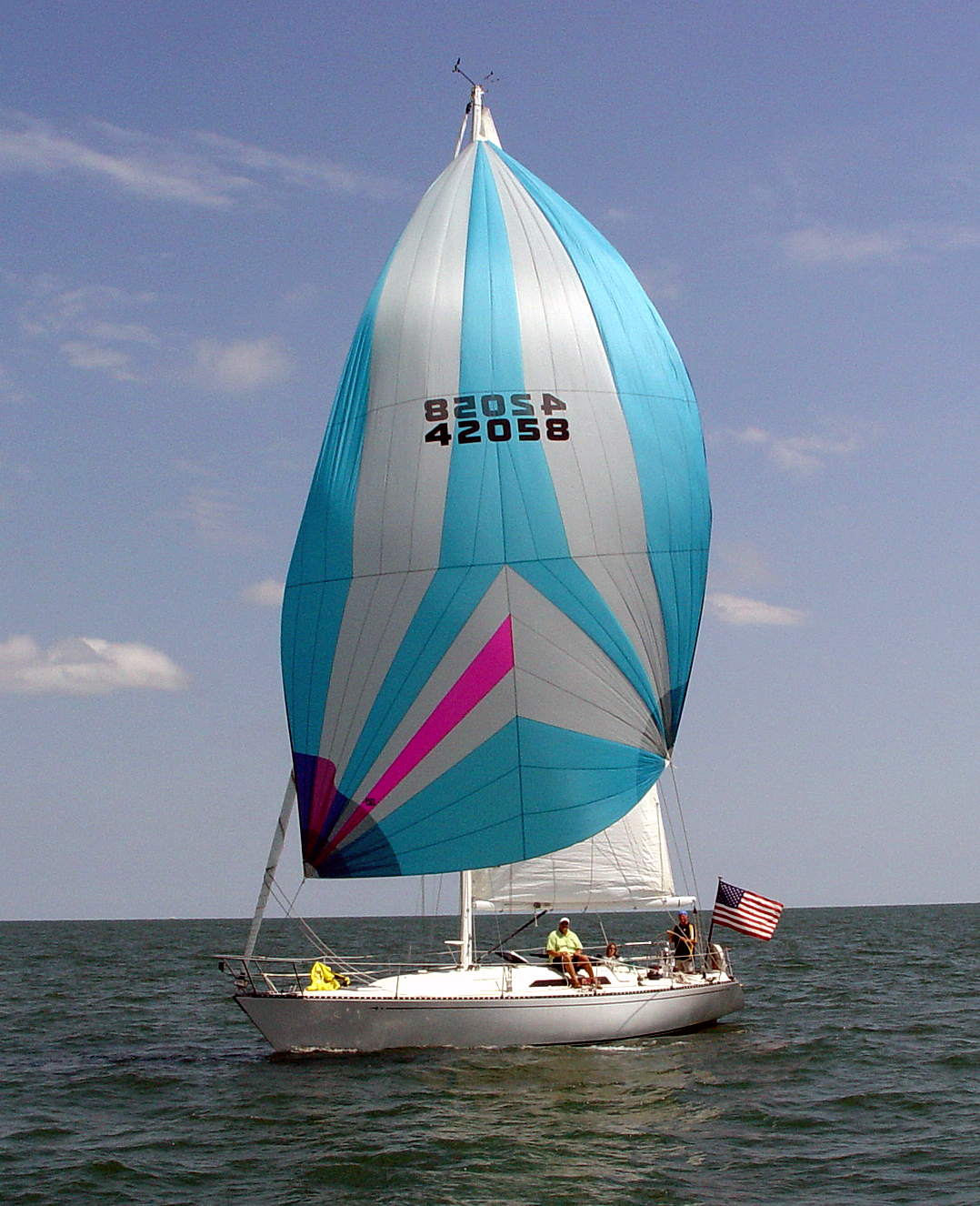
 Frenzy, a 1982 C&C 41 owned by our great friends, flying the asymmetrical spinnaker from our Schock 35

Sojourner, a C&C 30 owned by Bryan's sister and brother-in-law


 C&C 35 MKIII, Erin and Andrew, sailed on the Chesapeake Bay

Eric and Kristen's 1975 C&C 38 mk1

Triumph sailing home from the C&C Lake Erie Owners' Rendezvous at Spitzer Marina in Lorain, 2004

Saturday, January 7, 2017

Joli Double-Headsail Reach, August 2016

We had a great weekend at Put-in-Bay with our son A.J. and even hoisted our collegiate flags while on the mooring ball.  When we were getting ready to sail home on Sunday morning, it was pretty windy, so we hanked the small jib on the inner forestay.  By the time we got out past Ballast Island, the wind had died enough that the small jib just wasn't enough sail.  Joli felt sluggish!  We unrolled the #3 jib on the forestay and along with the smaller inner forestay jib, we had a nice, brisk sail!  We're passing Kelley's Island in the video (see link below).


University of Toledo for Polly & Bryan, Miami (of Ohio) University for Lorraine (undergraduate) & Kevin, University of Cincinnati for A.J. and Columbia University for Lorraine's Masters in Journalism


Link - Double-headsail Reach


Triumph Refit - Through-hull fittings

When we bought Triumph, she had 23 (Yes, 23!!!) "holes" in the hull.  Many of them were still in service, but many were abandoned equipment such as depth sounder or had fittings that were in need of repair.  We ending up removing and filling/glassing-in 10 through-hull fittings and seacocks.  We have since added 1 or 2 but we are much more comfortable walking away from the boat after a weekend aboard knowing that sources of water into the boat are in good working order.  We are a little OCD about shutting the boat down for the week, justifiably so since more boats sink at the dock than anywhere else.  We always close the seacocks on the galley and head sink drains, engine cooling water intake and ship/raw water intake.  We hang the ignition key on the engine intake to make sure we open it before starting the engine.


Wednesday, January 4, 2017

Lake Erie Afternoon Sail, August 2016

It was a day of "perfect timing".  When we left our dock, H51 at Sandusky Yacht Club, there was not much wind.  Some long-time sailing friends who used to race their Paceship 26 in Sandusky and now lived in Florida were visiting us for the weekend.  We were hoping to have a nice sail, so in spite of the lack of wind, we decided to head out.  As we motored out the channel across Sandusky Bay, a little bit of breeze started to stir up and we hoisted the mainsail.  By the time we reached the Lake, the breeze had filled in and we unrolled the jib to reach east towards Huron.  The wind had picked up to about 10 - 12 knots and we had a beautiful sail for about 45 minutes.  The wind started to die down so we tacked around and had a great lunch of pulled pork sandwiches, courtesy of my sister.  Just as we finished lunch, the wind picked up again and we had a great sail back in.
See a short video of our sail here: Lake Erie Sail on Joli

Monday, January 2, 2017

Triumph Returns to Original Name, Joli - Winter 2005

One of our favorite places to go on Lake Erie is Put-in-Bay on South Bass Island.  We typically pick up a mooring ball because the anchorage near the monument can be a little tricky.  We had picked up a mooring ball in August 2004 to spend the weekend there.  We had gone ashore for dinner and the northeast wind had picked up enough to kick up the chop in the mooring field.  As we were walking back to the Boardwalk to catch the water taxi back out to the boat, we noticed the police boat in the harbor.  Then we saw our boat being tied to the police mooring ball.  It turns out the the ring on our mooring ball had failed, allowing our boat to drift into the mooring field.  Our boat bore down on a man in his dinghy who was trying to help another boat pick up a mooring.  He was able to jump onto our boat, get the engine started and get Triumph out of the mooring field but not without damage.  One whole side of the hull had been gouged by the anchor on the bow of a moored boat.  Before the night was over, several other boats broke free and ended up on the rocks.  It was determined that there was a manufacturing flaw in the mooring rings.  The following winter, we had the hull and deck painted at Toledo Beach Marina.  We decided to go to a white hull and back to her original name, Joli.  TBM did an awesome job and we have been very pleased with the results.

The old Fuller Brush portholes (photo above) with plastic cowling in the cockpit were replaced with Newfound Metals portholes during the painting project.


The two photos above are from 1977 at Joli's home port in Washington.  Note the smaller steering wheel and coffee-grinders in the top photo.  When we bought Triumph, the coffee grinders had been replaced with electric winches and the large steering wheel was in place.

Gouges from grinding up against the anchor on the bow of a moored boat - We were pretty lucky a man in his dinghy was able to get on our boat and help.  The damage could have been much worse!


Bryan took photos and added captions to indicate what gear could be removed and not replaced.  We eliminated quite a bit of gear from the deck, cabin top and cockpit!  Many owners had made changes and added all kinds of extra stuff over the years.


The gouges had gone through the paint and into the fiberglass.


The sanding was the major part of the project.


 We chose Awlcraft 2000 in Matterhorn White since Hatteras uses this color.  We figure the color will be available long-term in case (or when?) touch-ups are needed.


Back to her original name!  Joli, ex-Triumph is now shiny white and ready to go in the water for the 2005 summer


We had an overnight stop at Put-in-Bay on the way from Toledo Beach Marina in Monroe, MI to Sandusky, OH.

Eight new portholes in the cockpit


Aft cockpit with the large steering wheel that was in place when we bought Triumph, now Joli, home port Sandusky, OH


New Engine and Generator - Winter 2004

When we bought Triumph in the Spring of 2002, she had an old Northern Lights generator and a Westerbeke diesel engine.  We had removed the generator right away because it was old, had a dry-stack exhaust design that we didn't like, and with the generator and support systems in the engine compartment, there was no room to work.  We also removed three 55-gallon drums of old, abandoned wiring and electronic equipment before getting Triumph in the water in Muskegon Lake to head home to Lake Erie.  Although the engine had at least 6000 engine hours and the seals were leaky, it was in acceptable working order.  In the fall of 2003, we had to decide if we were going to have the engine rebuilt or replaced.  Westerbeke had a good deal on the like-for-like replacement engine and a 5 KW generator, so we decided to tackle the replacement in the winter of 2004. Bryan broke out the Sawzall and cut a hole in the cockpit sole to remove the old engine and install the new engine and generator.  He has never been afraid of cutting holes in a perfectly good boat!  With the help of Toledo Beach Marina (Les Lashaway - thanks!) toledobeach.com, we rigged the old engine out and the new in.  We included a dual Raycor fuel filter, a preluber that runs prior to starting the engine and a crankcase vent filter to keep the engine box clean.  Our friends Rick and Judy at Latanick (latanickequipment.com) fabricated the new stainless steel motor mounts and Jim Zima of Great Lakes Diesel (greatlakesdieselmarine.com) installed the diesel and the generator with Bryan's help.


Old engine, probably 6000 engine-hours


New Westerbeke 108 HP diesel engine and 5 KW Generator


Looking down into the engine compartment from the cockpit - Bryan is facing aft and the generator is right below him.


Our engine compartment has easy access on both sides by removing the side panels.